Loading the page…
English
Englishעבריתالعربية
English
Englishעבריתالعربية
A loan is a financial tool that helps bridge gaps, fund major goals and receive money today that will be repaid in the future. The lender provides the amount and charges interest, while the borrower commits to repaying the principal and interest over a predetermined period, usually through monthly payments. Used correctly, a loan can help you move forward, but it is important to understand the full cost and your ability to repay before committing.
Loan basics: principal, interest, repayment methods and types of interest.
Overdrafts, credit card transactions, and revolving credit: the everyday debts you should know about.
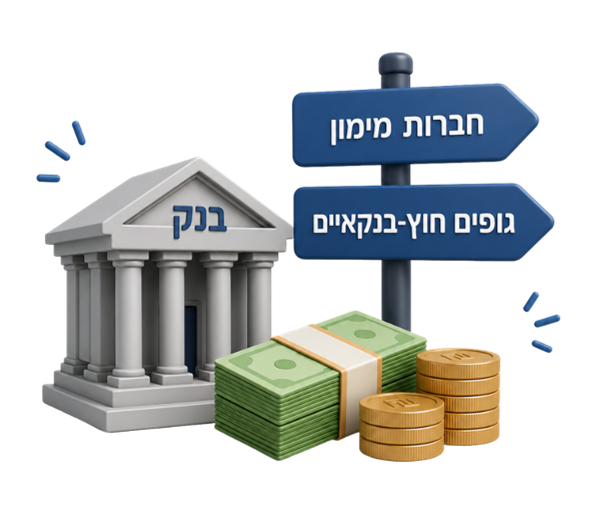
Non-bank loans, P2P lending and loans backed by Keren Hishtalmut and pension savings.
How your credit rating is set and how to use it to negotiate lower interest rates.
This article is intended for those who manage their own investment portfolios—for example, through an independent trading account at a bank or investment firm—and personally buy exchange-traded funds (ETFs), index-tracking funds, stocks, or bonds.
When we say a stock is “traded on the exchange,” it is easy to think that all of a company's shares circulate freely in the market and that anyone can buy or sell at any time. In practice, that is not the case.
A public company can raise capital in several ways. It can take out a loan, issue bonds, or issue new shares.
A company seeking growth, expansion, or new product development needs one key thing: money. It may come as a bank loan, from private investors (venture capital funds or angels), or from the public through the stock exchange.